In Wake of Wassergass Fire, Chief Explains Effective Water Supply Use
A fire that destroyed a home on County Line Road in a remote corner of Lower Saucon Township last week was fought by multiple companies who filled up their tanker trucks at Saucon Valley High School, several miles away from the blaze. But traveling to and from the high school proved to be the most effective way to fight it, explained Lower Saucon Fire Rescue Chief Ty Johnson, who helped direct the response.

A fire that destroyed a home on County Line Road in a remote corner of Lower Saucon Township last week was fought by multiple companies who filled up their tanker trucks at Saucon Valley High School, several miles away from the blaze.
But traveling to and from the high school proved to be the most effective way to fight it and maintain a continuous water supply, explained Lower Saucon Fire Rescue Chief Ty Johnson, who helped direct the response.
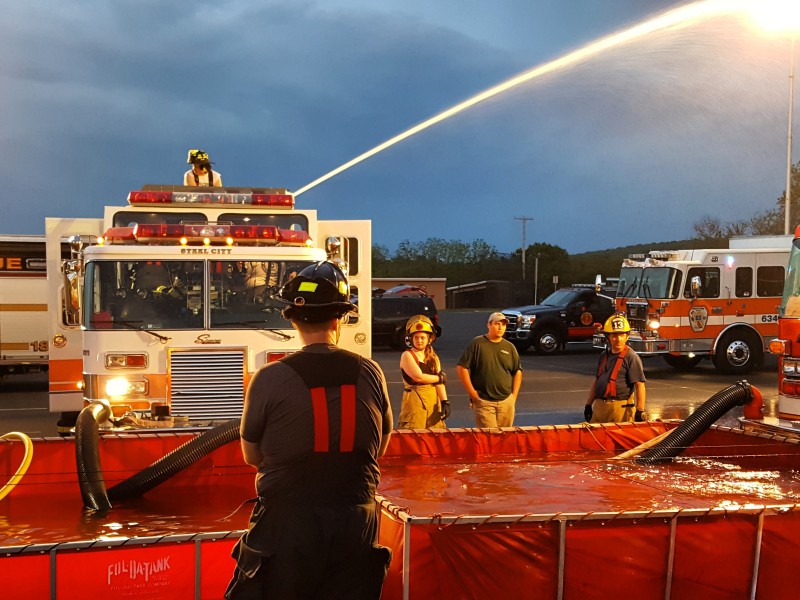
Although the home was ultimately lost to the fire, it was extinguished relatively quickly because the tankers left and returned in a relay, Johnson said during a recent drill night water supply training exercise that was previously scheduled at the Saucon Valley School District campus.
When hydrants aren’t available, portable ponds are also deployed for the tankers to fill on scene, for an engine to draft water out of to pump on the fire, he added.
There are several ponds near the scene of the County Line Road fire, but pulling water from ponds is not practical as a modern firefighting practice and can actually cause more problems than it solves, Johnson said.
For starters, the ponds are filled with sediment, algae, fish and debris that can damage pump equipment that is costly to replace. Secondly, they can be quickly drained of water (and left unable to be replenished). And lastly, access to the ponds themselves is often challenging because of the size of the fire companies’ vehicles.
Modern firefighting requires access to a continuously available water source, and in the case of the County Line Road fire–which was described as nearly fully involved by the time fire companies reached the scene–the nearest source was at the high school.
Many years ago the practice of taking water from ponds was more common in fighting fires, but the equipment used in that era was more forgiving and availability of continuous water supplies was less than it is today.


Author