Election 2026: Where Governor Candidates Garrity and Shapiro Stand on Data Centers
by Kate Huangpu of Spotlight PA
Spotlight PA is an independent, nonpartisan, nonprofit newsroom producing investigative and public-service journalism that holds power to account and drives positive change in Pennsylvania. Sign up for our free newsletters.
HARRISBURG — Republican Stacy Garrity is trying to differentiate herself from incumbent Gov. Josh Shapiro on something that’s top of mind for many Pennsylvanians–data center development.
A review of their positions shows at least two distinct differences, but also many blank spots where the candidates have not taken public stances.
Neither candidate has offered detailed plans for regulating data centers. Still, they have taken somewhat different positions on issues such as a moratorium on development and offering economic incentives.
Shapiro favors voluntary environmental, workforce development and energy standards in exchange for incentives and has been silent on a moratorium. Garrity hasn’t released a detailed plan, but says she favors mandatory rules not tied to climate and a pause on data center development.
At the same time, both candidates have also accused each other of flip-flopping on their support for data centers.
Garrity has said Shapiro was data centers’ “biggest cheerleader” until recently.
“He claims to be putting guard rails on an industry he was championing just a few months ago,” Garrity said at a data center listening session in Montgomery County last month. “It’s really a massive flip-flop, plain and simple.”
Shapiro has not commented directly on Garrity’s positions on data centers, but a spokesperson for his campaign said Garrity has a “long record of supporting completely unregulated data center development.”
Pennsylvanians across the state are fighting against proposed data centers, citing their impacts on energy prices, water availability and property values. A poll of Pennsylvania adults conducted this spring found 64 percent view data centers as a crisis or a problem.
Chris Borick, the director of the Muhlenberg College Institute of Public Opinion, which conducted the polling, said that the number of people concerned about data centers is “significant,” especially in a swing state such as Pennsylvania.
“Given [Garrity’s] standing in this race, the polling, the financial disparity between the candidates, I think she has latched on to data centers as a potential place to get a boost for her campaign and tap into what we’re seeing,” Borick said.
The governor can pursue private investment and shepherd projects through the state permitting system, as Shapiro did with nine data center projects in his Fast Track program. They can also sign or veto legislation sent to them by the legislature, which is scrambling to address growing concerns over data center development.
In late June, both the state House and Senate passed bills that would repeal a sales tax exemption for data centers’ purchases of computer equipment. The state Senate bill also would prevent data centers from receiving tax benefits for building in “opportunity zones–designated parcels of land where the state encourages private investment through tax breaks.
Here’s what we know about where the candidates stand on the issues:
Josh Shapiro and Stacy Garrity’s data center history
Both Shapiro and Garrity were initially enthusiastic about data centers and the private investment they attract, but have seemingly tempered those positions as communities raise concerns about their economic and environmental impacts.
Throughout his first term, Shapiro pursued partnerships with major tech and AI companies. He partnered with OpenAI to create a pilot program for government workers to use ChatGPT and attended an AI summit with U.S. Sen. Dave McCormick (R., Pa.), where $90 billion of private investment in data centers and auxiliary industries, such as energy generation and workforce development projects, was announced.
In June 2025, Shapiro touted a $20 billion Amazon Web Services investment to build data centers in Pennsylvania and provided these projects with “fast-tracked” permitting.
“Right now there is a battle for supremacy when it comes to AI, a battle that will be won by either the United States or China,” Shapiro said at the announcement. “I’m comforted by the fact that thanks to Amazon, the future of AI is going to run right here through the Commonwealth of Pennsylvania.”
Fast forward to February 2026, when Shapiro announced his plan to incentivize data centers to meet environmental and economic development standards.
“We need to be selective about the projects that get built here,” Shapiro said at his budget address, where he first unveiled his plan.
Last month, he released more details about those standards–which include using clean energy to power at least 32 percent of their operations and writing a community benefits agreement–in return for access to existing tax breaks.
As state treasurer, Garrity is not involved in attracting big tech investors into the state. But her early comments on AI were largely positive. She lauded Amazon’s $20 billion investment when it was announced. The following August, she said Pennsylvania could be “doing more” to encourage data center development.
“We have 88 data centers. Ohio is kicking our butt. They have over 192. And so, you know, we could just be doing so much more in that space,” Garrity said on a radio show.
But her tone began to shift in early 2026. In January, Garrity told reporters there are a lot of areas in the state where communities would welcome data centers, but “you have to engage with them.”
“You have to talk to them. You can’t just jam it down their throats,” Garrity said.
Then in June, Garrity began hosting data center listening sessions across Pennsylvania, where she has criticized Shapiro for “doing nothing to address the concerns that were raised by communities about data center development” and letting developers benefit from “sweetheart tax deals.”
Garrity has told reporters she supports more restrictions on the industry, criticizing Shapiro’s GRID proposal for being voluntary, but her campaign did not answer Spotlight PA’s questions about specifics. She also proposed locating data centers in brownfields or industrial sites, away from residential communities.
“I’m not opposed to data centers, but we have to do them the right way,” Garrity said at a listening session in Montgomery County.
Regulating data centers
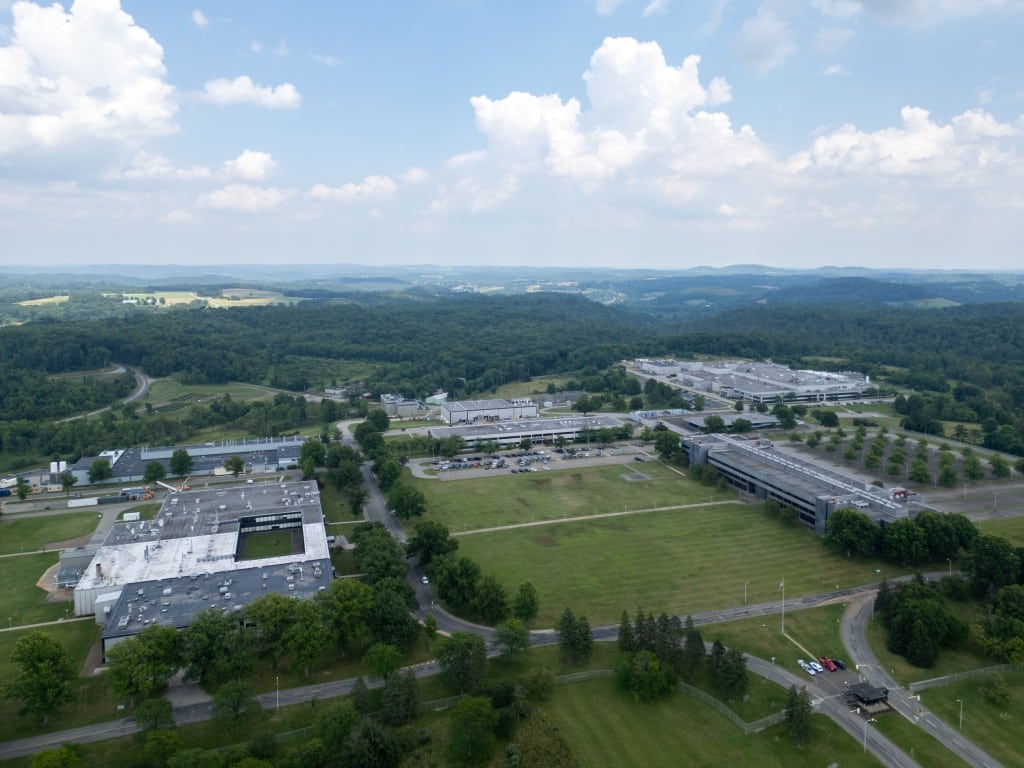
Data centers are not subject to any specialized regulations in Pennsylvania. Still, they must follow the same state and local regulations as other developments, including obtaining proper zoning status and construction permits.
But in recent months, the Democratic-led state House has passed a slate of bills aimed at regulating and overseeing data centers–from mandating disclosure of energy and water usage, to conditioning tax benefits on factors like verifying they haven’t used non-disclosure agreements with government agencies.
One of the most stringent bills would direct the Public Utility Commission to establish baseline requirements for contracts between data centers and utility companies that would apply to most of the newly proposed facilities in Pennsylvania. It also mandates that data centers use at least 32 percent clean energy by 2035 to power their campuses and directs them to contribute to state programs that help low-income Pennsylvanians pay their heating or cooling bills.
In a press release, a Shapiro spokesperson said the administration “worked closely” with the prime sponsor of the bill to “establish baseline standards for how data centers should operate,” but stopped short of endorsing the bill.
“[The Shapiro administration] is working closely with the House Democrats on an appropriate package of data center legislation that will protect Pennsylvanians and establish strict guardrails to hold data center developers accountable,” Rosie Lapowsky, spokesperson for the administration, said in a statement to Spotlight PA.
But Shapiro’s own signature data center proposal takes a different approach, tying an existing economic incentive–a sales and use tax exemption for data centers’ purchases of computer equipment and tax breaks associated with designated parcels of land–to meeting environmental, economic and energy standards.
He would need the state legislature to buy in to do so. The state House has already passed a bill that includes these standards; however, the state Senate has yet to do so. (The state House also passed a conflicting bill that would repeal the tax exemption.)
Shapiro’s standards, also known as GRID, include creating at least 200 construction jobs, paying $1.5 million annually in total wages and bringing or paying for the energy they use. Data centers that meet these standards would also have access to fast-tracked permitting.
Notably, these standards would be voluntary.
Garrity has not specified what kinds of regulations she would support, but criticized Shapiro’s GRID standards for being voluntary. She said she would mandate regulations for developers.
“[Shapiro’s regulations] are voluntary. They’re for tax breaks,” Garrity told reporters at her data center listening session in Montgomery County in June. “I’m saying no, they absolutely have to.”
In a statement to Spotlight PA, Garrity said that while she wants a framework to address data center development, she does not support the “clean energy mandate” included in the GRID standards bill.
“We need to be utilizing the abundant natural gas resources under our feet that currently accounts for 60 percent of Commonwealth’s electricity generation,” Garrity said.
Garrity pointed to a development in Homer City, where a former coal plant is being converted to provide energy for data centers, as a positive example. She added there are many rural sites, including brownfields, that would benefit from data center developers’ investments.
“It really is improving in the community. It’s going to add housing, it’s going to add jobs,” Garrity said. “Not everybody’s happy with it, but there’s a lot less contention.”
Economic incentives
Data centers have access to a few major economic incentive programs in Pennsylvania, and there’s growing support in the legislature to restrict access to some of them.
In 2021, the state legislature amended an existing sales and use tax exemption for data centers, allowing them to claim an unlimited refund on the sales tax of computer equipment purchases.
Data centers aren’t mandated to disclose their spending, so it’s unclear how much the state has lost in tax revenue due to the exemption. But in Shapiro’s latest budget projections, he estimates that the exemption will have cost the state $2 billion by 2031.
Both the state House and state Senate passed separate legislation that would repeal the exemption in the past month, but neither bill has passed the other chamber.
Garrity said she would support appealing the exemption.
“Yes, my goodness, even Ohio has paused that,” Garrity told reporters at the same listening session in Montgomery County.
Shapiro did not respond to Spotlight PA’s inquiry as to whether he would support repealing the exemption. His GRID plan calls on lawmakers to amend the exemption so only data centers that meet his requirements can access the tax break.
Shapiro’s plan also proposed that lawmakers change economic opportunity zone programs, which allow investors to receive tax breaks if they build projects in specific places, so that data centers could only access the program if they meet GRID standards.
The state Senate recently passed legislation that would prohibit data centers that were built from February 2026 on from accessing those tax breaks at all.
When asked by Spotlight PA about whether she supports changing the opportunity zone program, Garrity said she does “not believe data center development should receive special tax incentives.” She previously told reporters there should be “no more sweetheart tax deals” for developers benefiting billionaires and their companies that are building these centers, such as Jeff Bezos and Amazon Web Services.
Moratorium on data center development
State lawmakers have introduced a bevy of bills that would enact moratoriums on data center development. Some give municipalities the option to enact a moratorium for a few months while others create a blanket moratorium across the state for three years.
While none of these bills have passed through both chambers, the state House passed the bill allowing temporary local moratoriums at the end of June and it was subsequently voted through in the Senate Local Government Committee.
Garrity said she would support a “pause” in data center development for “however long it takes” so townships could update zoning requirements and plan emergency services needs related to data centers.
She emphasized, however, that she would not support a moratorium lasting three years or longer, but did not specify how long a pause should last.
The difference, she says, is that “a moratorium is a definitive period of time.”
Shapiro’s campaign did not respond to questions about whether he would support a moratorium on data center development.
BEFORE YOU GO… If you learned something from this article, pay it forward and contribute to Spotlight PA at spotlightpa.org/donate. Spotlight PA is funded by foundations and readers like you who are committed to accountability journalism that gets results.