The Ultimate Valentine’s Gift: Bar Talk with Eric Bartosz
First, I hope your 2026 is off to a solid start and that you are still getting a daily dose of fresh air and sun amid this deep freeze.
Now that the calendar page has flipped, this is the perfect time to discuss emotional intelligence. February has a way of putting relationships front and center in our focus area. If you have a Valentine in mind, the most meaningful gift you can give them probably isn’t wrapped in paper, covered in chocolate or in a small velvet box. It’s becoming the best version of yourself for them.
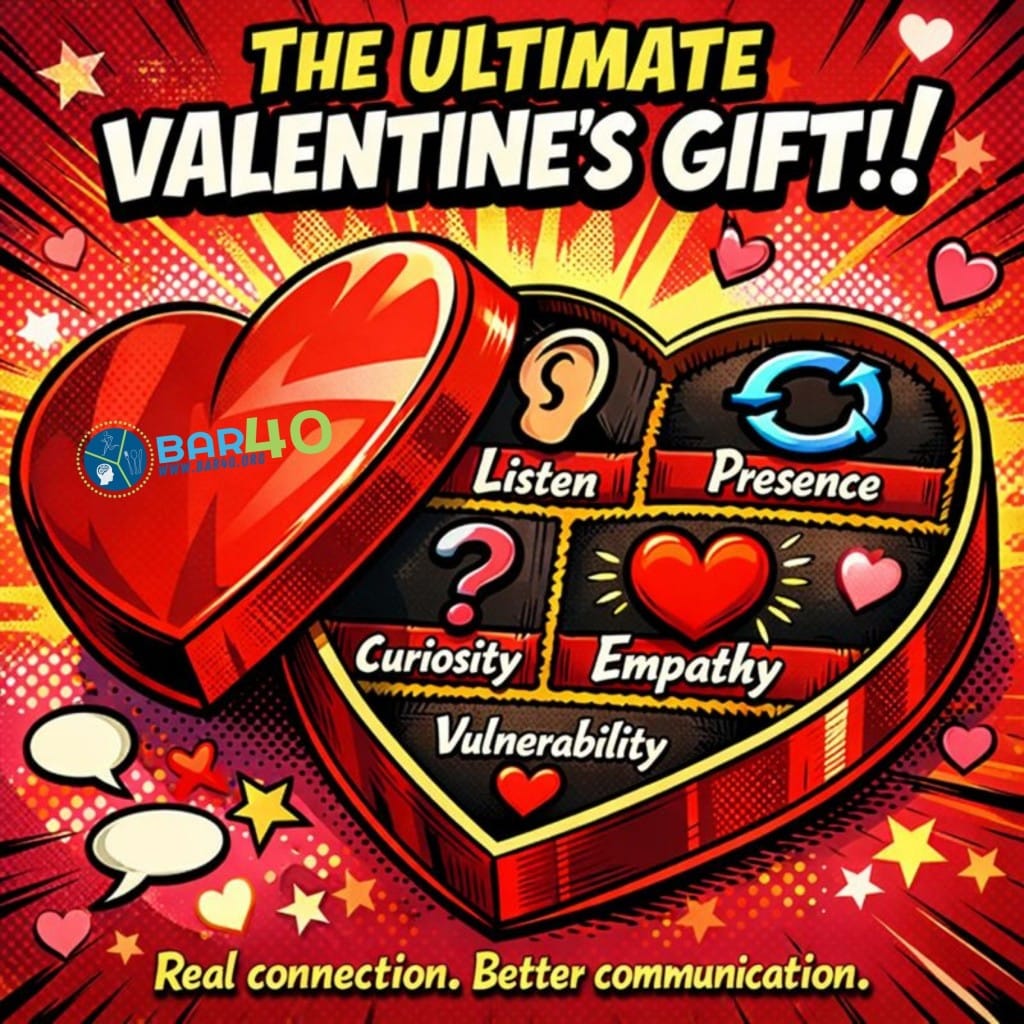
While this may be common sense, if we honestly assess our own relationships, we may agree it’s not always common practice. The disappointing reality is that we often treat the people we are closest to most carelessly when it comes to their feelings. While this is unfortunate, it’s not entirely surprising. We spend years in classrooms learning academic fundamentals, but most of us did not attend a school where part of the curriculum focused on becoming effective communicators and building our skills in navigating human relationships. Based on that, how much time do we spend learning how to best connect with other people? For most of us, the answer is almost none, and we rely heavily on figuring it out on our own or taking lessons from those around us. It’s safe to say, we may pick up some bad habits along the way.
I’ll pause here to say that even if you don’t have a special someone in mind for Valentine’s Day, developing your emotional intelligence and communication skills might be the ultimate gift to yourself. The common denominator is connection, and how adept we are at creating and maintaining it will continuously help open doors and pave the way to success.
Whether we’re talking about marriage, friendships, leadership, parenting or business, nearly every meaningful outcome in life is shaped by how well we communicate. Emotional intelligence (EQ) and our ability to communicate and connect effectively with others are areas for development. This is a fundamental difference between EQ and IQ, which is considered fixed throughout life. In other words, your IQ score will be the same at age 77 as it was at age 7, but our EQ will continue to get higher the more we work on it.
This is one of the reasons I am a fan of all of Charles Duhigg’s work, including his latest book, “Supercommunicators.” His central insight is refreshingly simple: the people who communicate best are not necessarily the most charming or articulate. They are the ones who know how to truly sync up with others. They listen differently, ask better questions, notice emotions and adapt their approach in real time.
The good news is that these are learnable skills.
Below are five practical ways to become a more effective communicator starting today, and none of them require special training. Just repetition, and the mindfulness of becoming more aware of ensuring your words and actions are aligned with your intentions.
1. Start by recognizing what kind of conversation you are actually having
Most conversations fall into three categories: practical conversations focused on solving problems or making decisions, emotional conversations centered on feelings and experiences, and social conversations revolving around values and identity.
Communication breaks down when people are in different lanes. You think you’re problem-solving while the other person is looking for empathy. You’re sharing facts while they’re trying to express their feelings.
Here’s an example that you may be able to relate to: Your spouse mentions they had a tough day at work. If you immediately jump into “have you tried talking to your manager?” when they just needed to vent, you’re not synced up, as there are two different conversation types going on.
Before responding, pause and ask yourself: What does this person really need right now? Advice? Understanding? Connection? Then meet them there. This single shift will eliminate a surprising amount of friction in your relationships.
2. Replace “I get it” with genuine curiosity
Most of us believe we’re good listeners. In reality, we’re often just waiting for our turn to talk, or ‘reloading,’ thinking of what we are going to say next.
Great communicators don’t assume they understand others. They practice curiosity. Instead of jumping to conclusions, they ask open-ended questions that invite people to share their experience:
What part of that was hardest for you? How are you feeling about all this? What does this mean for you right now?
Try this in your next conversation: ask at least two follow-up questions before offering your own opinion. You’ll feel the tone shift almost immediately.
3. Make people feel heard, not just listened to
There’s a big difference between hearing words and helping someone feel understood.
Effective communicators reflect both content and emotion. They might say: “It sounds like you felt overlooked,” or “That must have been frustrating.”
You don’t need perfect language. You just need to show that you’re paying attention to how the other person is experiencing the situation. This creates trust and openness, which is the foundation of every strong relationship, personal or professional, and also creates that feeling of connecting or being ‘in sync’ with someone.
4. Match mood and energy
We instinctively sense whether someone is upbeat or discouraged, calm or overwhelmed. Effective communicators adjust their tone accordingly.
If someone is low-energy and stressed, charging in with high enthusiasm can feel dismissive. If someone is excited and you respond flatly, it creates distance.
Matching mood and energy signals empathy. It tells the other person, “I’m with you.” Pay attention to the emotional temperature of the room, then consciously align your tone with it.
5. Lead with vulnerability
This is the one many of us avoid, especially in professional settings. But vulnerability is often the fastest path to connection.
When you share something real (uncertainty, fear, or even just admitting you don’t have all the answers), you give others permission to do the same. Meaningful conversations almost always start when someone takes the emotional lead.
A simple “I’ve been wrestling with this lately” or “I’m not totally sure I’m handling this right” can completely change the dynamic.
The bigger picture
Becoming a better communicator is not about clever techniques or winning arguments. It’s about presence, curiosity and caring enough to truly understand another human being.
Simply put, these skills make us better and cover virtually all areas. Better parents, leaders, partners, teammates, spouses and people. They also compound over time. By starting down the path of improving your active listening and meaningful connections, these habits will fundamentally change how you move through the world and interact with everyone in your life. If you think about anyone in your life that you would describe with terms like ‘charismatic,’ ‘magnetic personality,’ ‘highly likable’ or ‘gets along with everybody,’ I assure you that they do not have any magical powers, aside from a passion for becoming effective communicators who have dedicated themselves to building their EQ skills. Where our focus goes, our energy flows, and our skills grow.
Last but not least, if you are looking for a solid Valentine’s Gift idea, look no further than the Charles Duhigg book I referenced: Supercommunicators: How to Unlock the Secret Language of Connection.
Author