Weather Advisory Issued for Heat, Humidity
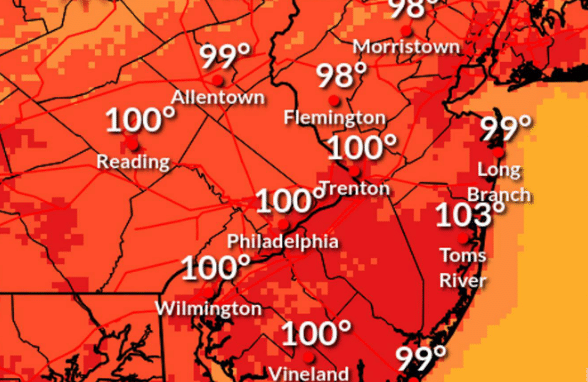
Although it isn’t officially summer yet, summertime weather conditions will return to the Lehigh Valley this week, and they could pose risks to individuals who are especially sensitive to heat and humidity or to those who will be spending significant time outside.
The National Weather Service has issued a heat advisory for upper Bucks, Northampton and Lehigh counties for 11 a.m. Thursday to 8 p.m. Friday, when the combination of heat and humidity could make it feel like 100 degrees-plus.
High temperatures both days will be in the low 90s, and there will be a chance of showers and thunderstorms off and on throughout the period.
Saturday and Sunday are expected to be sunny and dry, with lower humidity but continued above normal temperatures. Saturday’s high is forecast to be 88.
Saturday is also the opening day of the summer season at the Hellertown Pool, which will be open daily from 12 to 7 p.m., weather permitting, through Aug. 22, 2026. Information about pool passes and daily rates may be found on the Hellertown borough website.
The pool will host several Dip-N-Dance events this summer, featuring a local DJ and family-friendly, poolside fun. The first of those is scheduled for Thursday, June 25 from 1 to 3 p.m. Additional dates are Thursday, July 16; Thursday, July 30; and Thursday, Aug. 13, all from 1 to 3 p.m.
Below are tips and information about staying safe when the heat index–which measures how temperatures feel in combination with humidity–is over 100.
As a general guideline, a heat index above 100°F means conditions can become dangerous, especially during prolonged outdoor activity. The combination of heat and humidity makes it harder for your body to cool itself, so caution is warranted even if the actual air temperature is lower.
Stay Hydrated
- Drink water regularly, even if you don’t feel thirsty.
- Increase fluid intake before, during and after outdoor activity.
- If you’re sweating heavily for extended periods, consider beverages that replace electrolytes.
- Limit your intake of alcohol, which can contribute to dehydration.
Avoid Peak Heat
- Stay indoors in air-conditioned spaces when possible.
- If you need to be outside, try to schedule activities for early morning or evening.
- Take frequent breaks in the shade or in cool environments.
Dress for the Heat
- Wear lightweight, loose-fitting, light-colored clothing.
- Use a wide-brimmed hat and sunglasses.
- Apply sunscreen; sunburn can impair your body’s ability to cool itself.
Watch for Heat Illness
- Symptoms of heat exhaustion can include heavy perspiration, weakness, dizziness, nausea, headache and cool, clammy skin.
- Symptoms of heat stroke–which is a medical emergency–include a body temperature of 104°F (40°C) or higher; confusion, altered behavior or loss of consciousness; hot, red skin; and a rapid pulse.
- Move to a cooler place, drink fluids, and rest if any of the above symptoms occur and call emergency services immediately if heat stroke is suspected.
Protect Vulnerable People
- Pay extra attention to older adults, infants and young children, people with chronic medical conditions, outdoor workers and athletes, and pets.
- Never leave children, adults or animals in parked vehicles, even briefly.
Keep Your Home Cooler
- Close blinds or curtains during the hottest part of the day.
- Use fans to improve air circulation, though fans alone may not be enough during extreme heat.
- If you don’t have air conditioning, spend time in libraries, malls, community cooling centers or other air-conditioned public spaces.
Adjust Physical Activity
- Reduce intensity and duration of exercise.
- Take more frequent rest periods.
- Stop immediately if you experience dizziness, weakness or unusual fatigue.
Author