The Big Three: Bar Talk with Eric Bartosz
I’ll start with an easy one to remember: the 3C’s. These ‘big three’ are competent, capable and confident. I won’t delve into data and statistics about self-confidence levels in 2025 because the bottom line is that regardless of where any of us falls on that spectrum, learning new ways to build up these vital areas will only improve our lives.
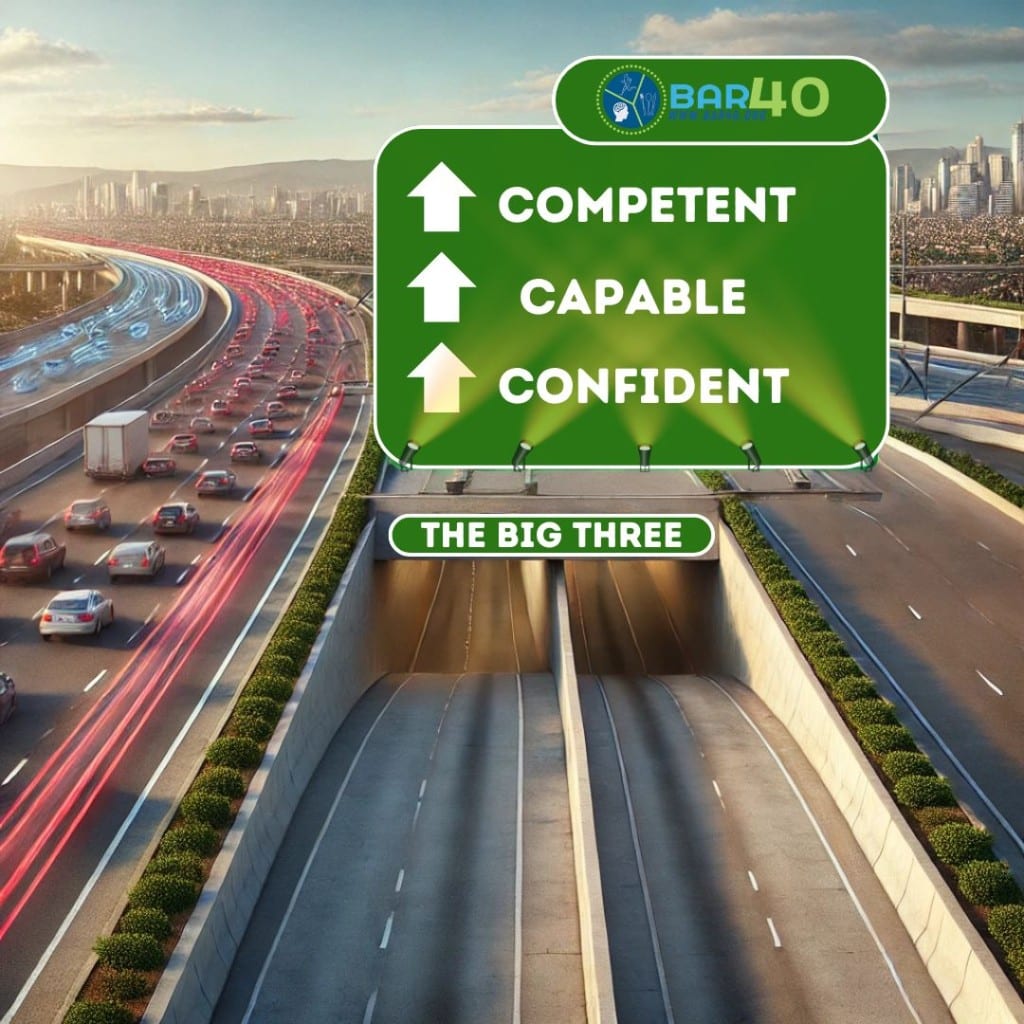
As someone who not only teaches leadership but also has a passion for the subject, I wanted to share some simple and easy-to-implement practices that certainly have many applications in our work life, but are just as valuable in our personal lives. The more capable we become, the more confidence we have in ourselves to be able to handle anything that life throws our way. Another way to look at this is that ‘action alleviates anxiety.’ When stressful situations arise, our confidence in being able to identify and execute a solution ensures that we possess the mental resources and fortitude to deal with it successfully, which helps reduce any tendency to overthink and worry about the ‘what if’s?’ in life.
Below are ‘pro tips’ in four core areas to develop your ‘Big Three’:
Emotional Intelligence enhancement:
- Self-mastery: Understand your weak areas and emotional triggers to manage them effectively, thereby preventing others from easily rattling you.
- Self-awareness: Identify your strengths, weaknesses and dominant habits. Habits are the foundation of our daily routines and default settings. Most of us have good ones and bad ones. Find ways to capitalize on the good and choose a starting point to address a bad habit, then create a plan to reduce or eliminate it. Repeat the process as needed!
- Build your discipline muscle: cultivate a mindset of prioritizing what matters most rather than what matters now. Delayed gratification fosters perseverance and grit, enabling us to resist easy choices in the moment that do not align with our long-term goals.
Capability through clarity:
- Define what success looks like for you. To practice our aim, we need to know what the target is.
- Create SMART goals. Determine what short-, mid- and long-range goals you have and use the SMART framework to ensure they have the right ingredients to be achieved and elevate the results in your life.
- Be the CEO of your life: Be ruthless in cutting the waste and deadwood out of your life routines and free up time to focus on what your highest-value priorities are.
Embrace learning:
- Curiosity is a superpower, and learning as much as possible about your passions and areas of interest has never been easier with free online classes. Become a subject matter expert in areas that will enrich your personal or professional life, and ideally both!
- If you relate to the feeling that there is not enough time in the week, perhaps it’s due to how you manage your time. We all get the same 168 hours per week, but how much we do with those hours varies wildly. To become more productive, create a time journal for a week and honestly assess where your hours are going, allowing you to identify areas for improvement. For many people, social media usage averages over three hours per day in the U.S. Cutting that in half would immediately give you an extra 10 hours a week to apply toward a priority in your long-term goal planning.
Consistency leads to capability:
- The focus is progress, not perfection. Slight daily improvements accumulate and compound, leading to significant positive changes. Reframe what you consider to be failures as learning opportunities rather than final outcomes and rethink any old self-narratives that limit your ambitions.
- Catch yourself doing something right! Track your progress towards goals by identifying your daily wins. This practice helps build personal accountability and serves as a record of all the successes we have achieved in previous days and weeks, providing an extra motivation boost when needed.
- Dedicate your focus to controlling the controllable and stop wasting time and mental energy trying to fix or solve the things that are not in your control. That’s a simple but not easy idea, but when we can rapidly assess what we can and cannot influence, we stop wasting effort in pointless (and frustrating) efforts.
I hope that these starting points create a framework to build on, and there is no better time than the Summer of 2025 for getting started! History is not destiny and today is a brand-new blank page to start writing the rest of your life story. Make sure it’s one you will be proud to read in the coming years!

Author